
LiveRoute: Smart Mobility Platform for Event Traffic Management
School Project | UBC | PLAN 341: Smart Cities: Concepts, Methods and Design
Urban Planning • Smart City Design • Transportation Planning • Urban Systems
In collaboration with Rick Du, Ira Giligson, Tina Jiang, Shaam Purushothaman Jayakumaran, Sarah Raheja
3 April 2025
Introduction
LiveRoute is a proposed smart-city mobility platform designed to address traffic congestion and crowd movement challenges during large-scale public events. Cities such as Vancouver regularly host events that attract tens of thousands — or even millions — of attendees, placing sudden strain on transportation systems and surrounding infrastructure.
This project explores how predictive analytics and real-time mobility data could be integrated into a centralized platform to help city authorities, event organizers, transportation operators, and attendees better manage traffic flows before, during, and after major events.
The LiveRoute system combines a centralized mobility analytics platform with a user-facing application to provide dynamic routing guidance, crowd monitoring, and predictive planning for event-related transportation.
Problem
Large-scale public events can generate sudden and significant surges in transportation demand, overwhelming transit systems, road networks, and surrounding urban infrastructure.
Examples in Vancouver include major concerts, sporting events, festivals, and international events such as the FIFA World Cup. These events can bring tens or hundreds of thousands of visitors into concentrated areas, creating challenges such as:
overcrowded transit stations and long wait times
heavy congestion around venues and surrounding streets
safety concerns due to dense pedestrian movement
inefficient coordination between different transportation modes
Current event traffic management strategies often rely on static transit schedules, pre-planned road closures, and general warnings to avoid travel disruptions. These approaches typically lack the ability to dynamically respond to real-time conditions or provide personalized routing alternatives for event attendees.
Current Situation
In Vancouver, event traffic is currently controlled through:
Static transit schedules → unable to mitigate real-time changes
Pre-planned road closures → realistic traffic flows may vary
Advising less road use → lack of feedback and alternatives
The Gap
Current services fail to dynamically respond to real-time traffic and event-specific mobility needs.
Warnings ≠ Solutions – People are told to expect delays without accessible alternatives provided
Expensive and Ineffective Planning – Traffic plan drafting takes significant resources, and yet slow-downs continue
Routing Apps Fall Short – Navigation reacts to traffic conditions, unable to predict event surges
LiveRoute proposes a centralized smart mobility platform that integrates predictive modelling and real-time mobility data to support event-related transportation management.
The system would combine multiple data sources—including transit usage, parking information, ride-hailing services, shared mobility services, and user-generated data—to generate insights about crowd movement and traffic patterns.
The platform is designed to operate across three key phases:
Proposed
Solution
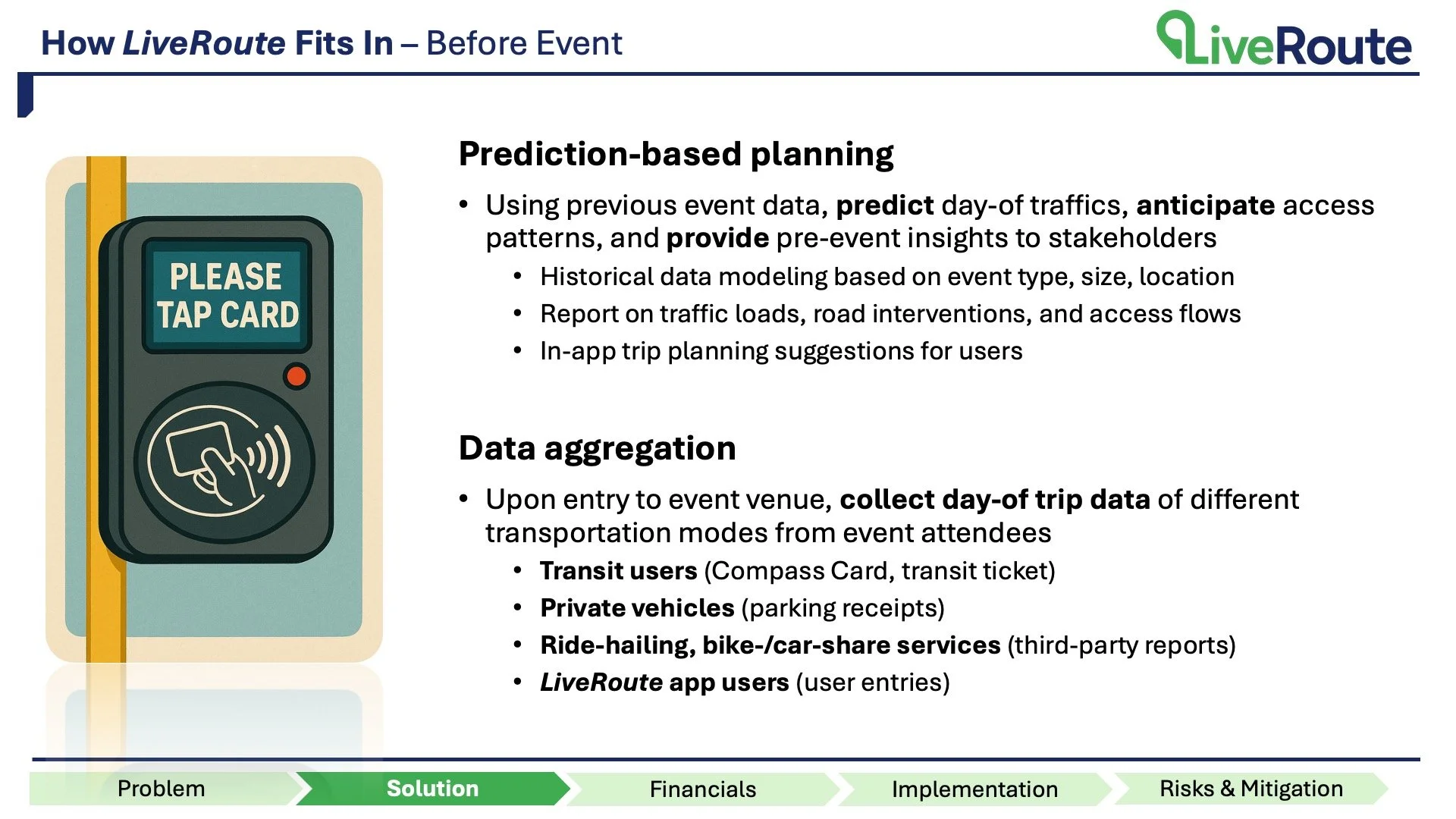
Before Events
analyze historical event and mobility data to predict expected transportation demand
generate planning insights for transportation agencies and event organizers
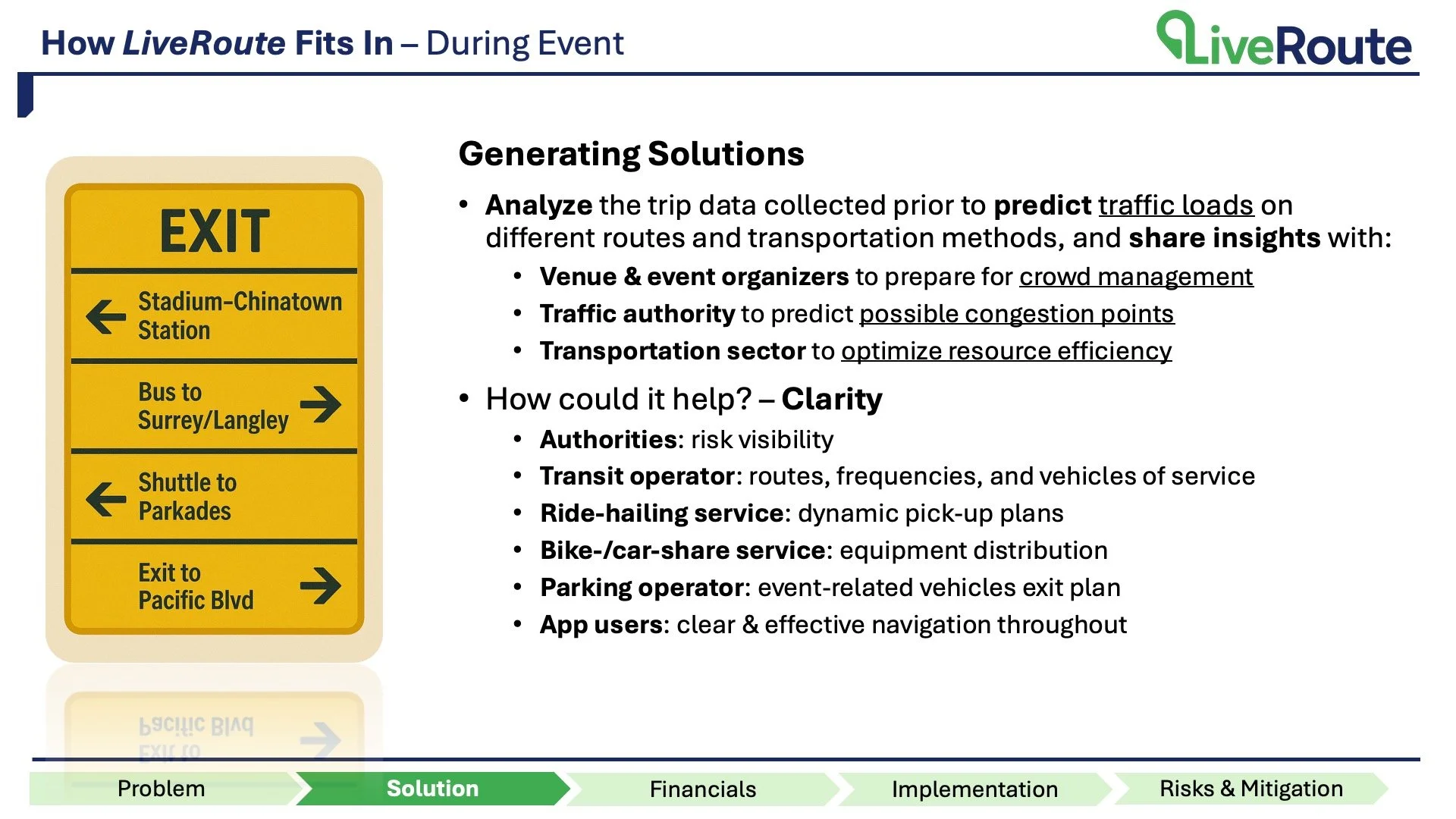
During Events
collect and analyze real-time mobility data to monitor traffic conditions
provide insights to authorities and transportation providers to optimize services
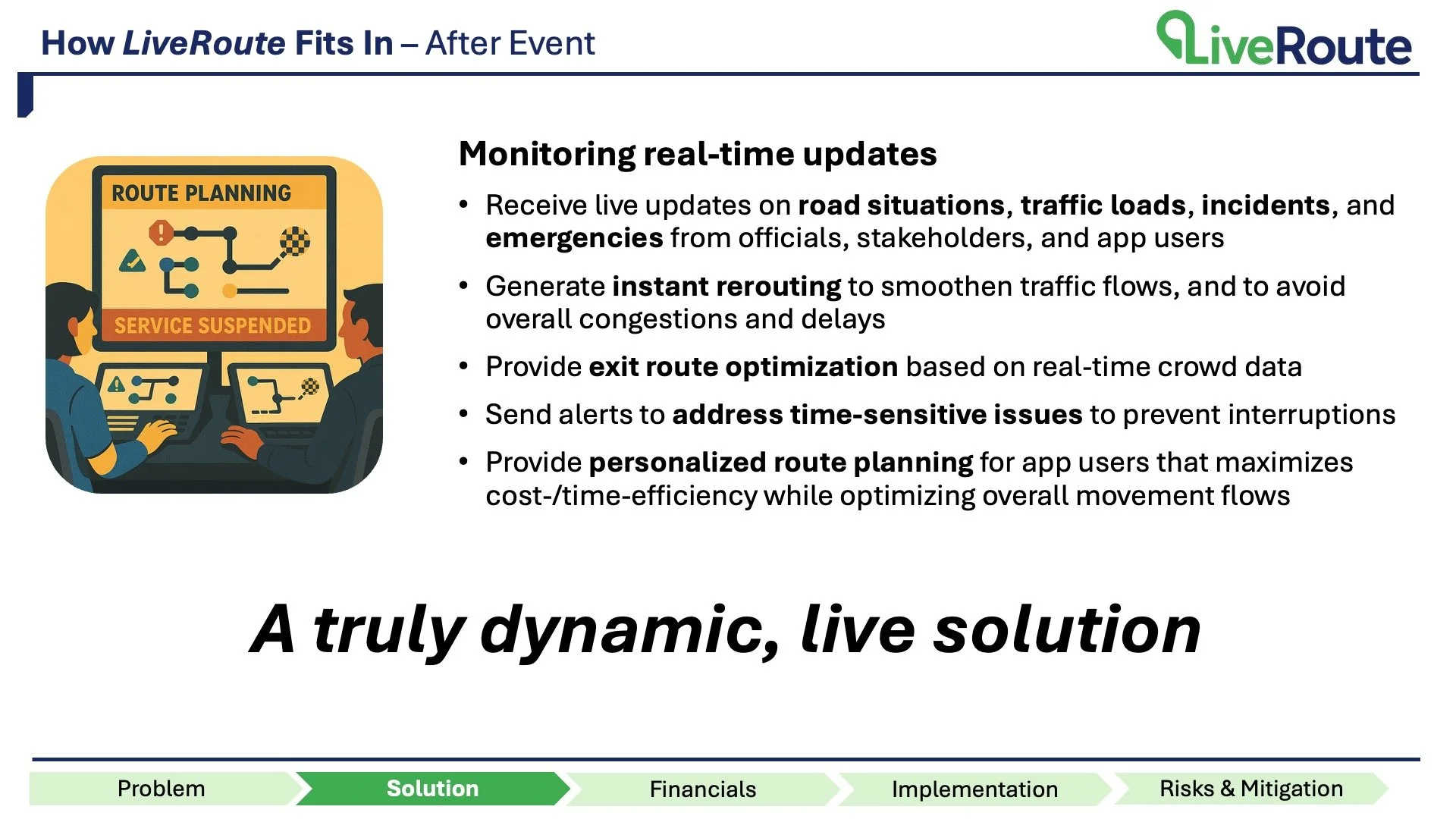
After Events
monitor crowd dispersal and road conditions
generate dynamic rerouting suggestions to reduce congestion and delays
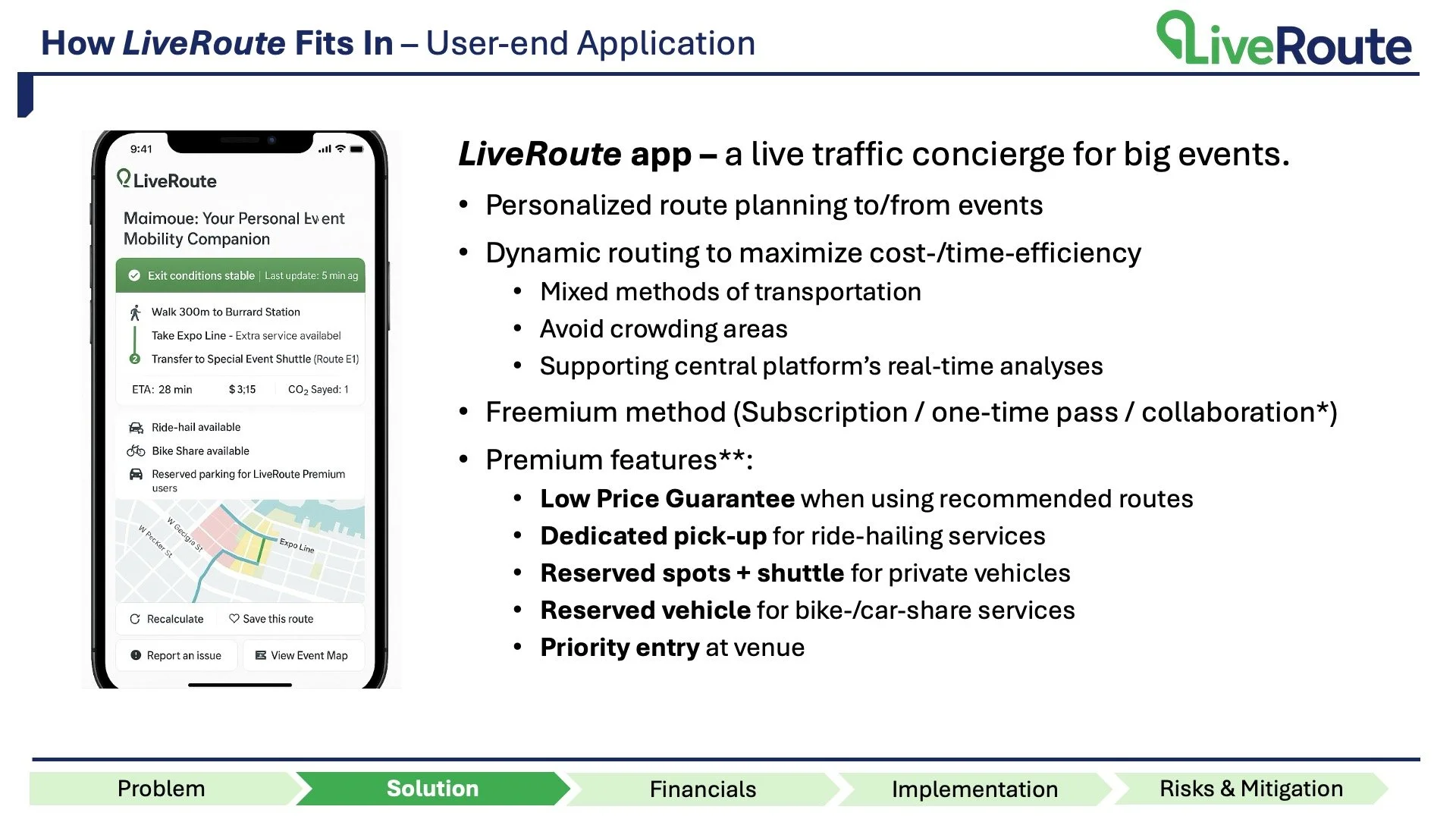
User-end Application
Alongside the central analytics platform, the LiveRoute mobile application would provide personalized route planning and navigation for event attendees.
Strategics
Implementation
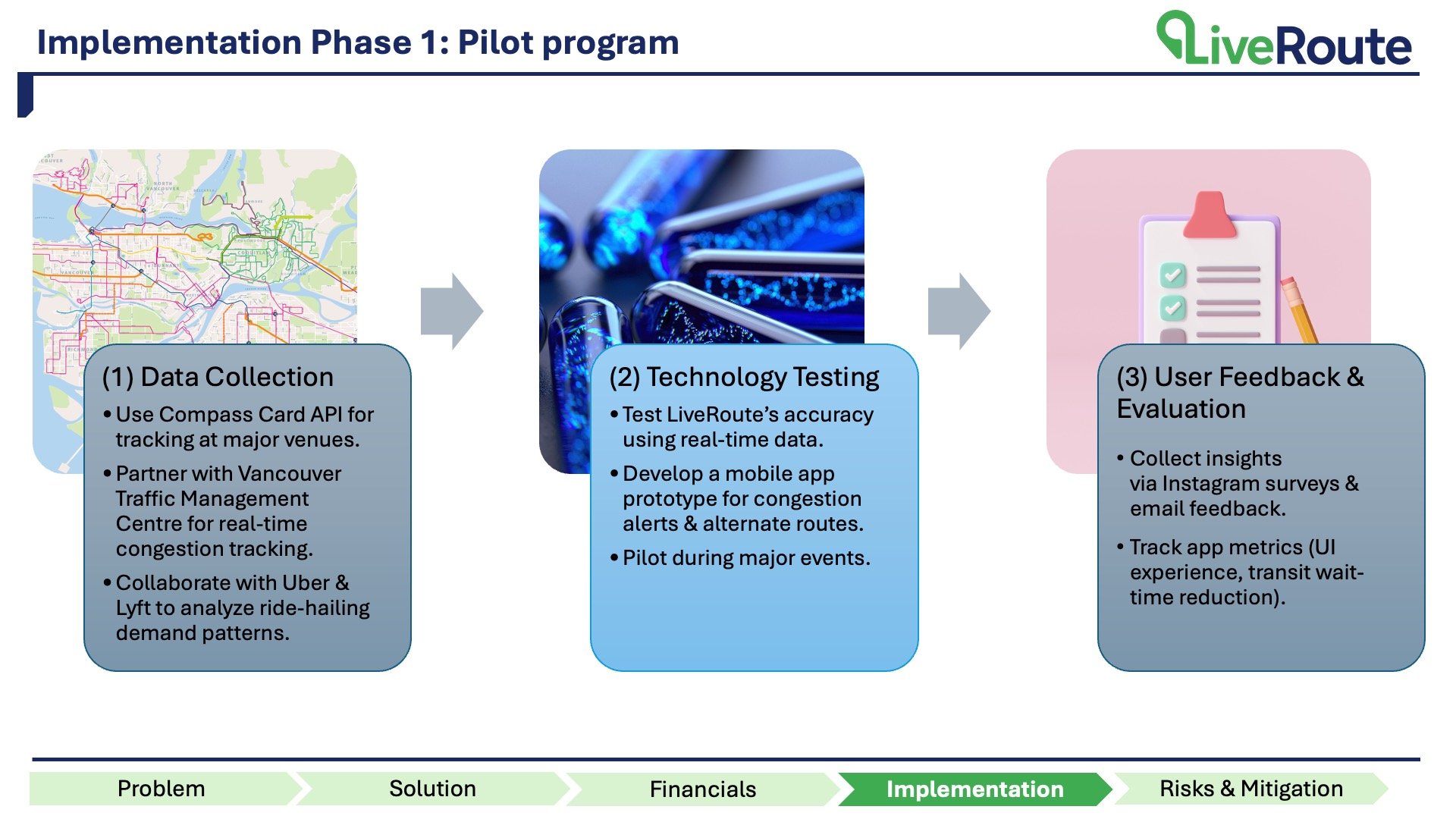
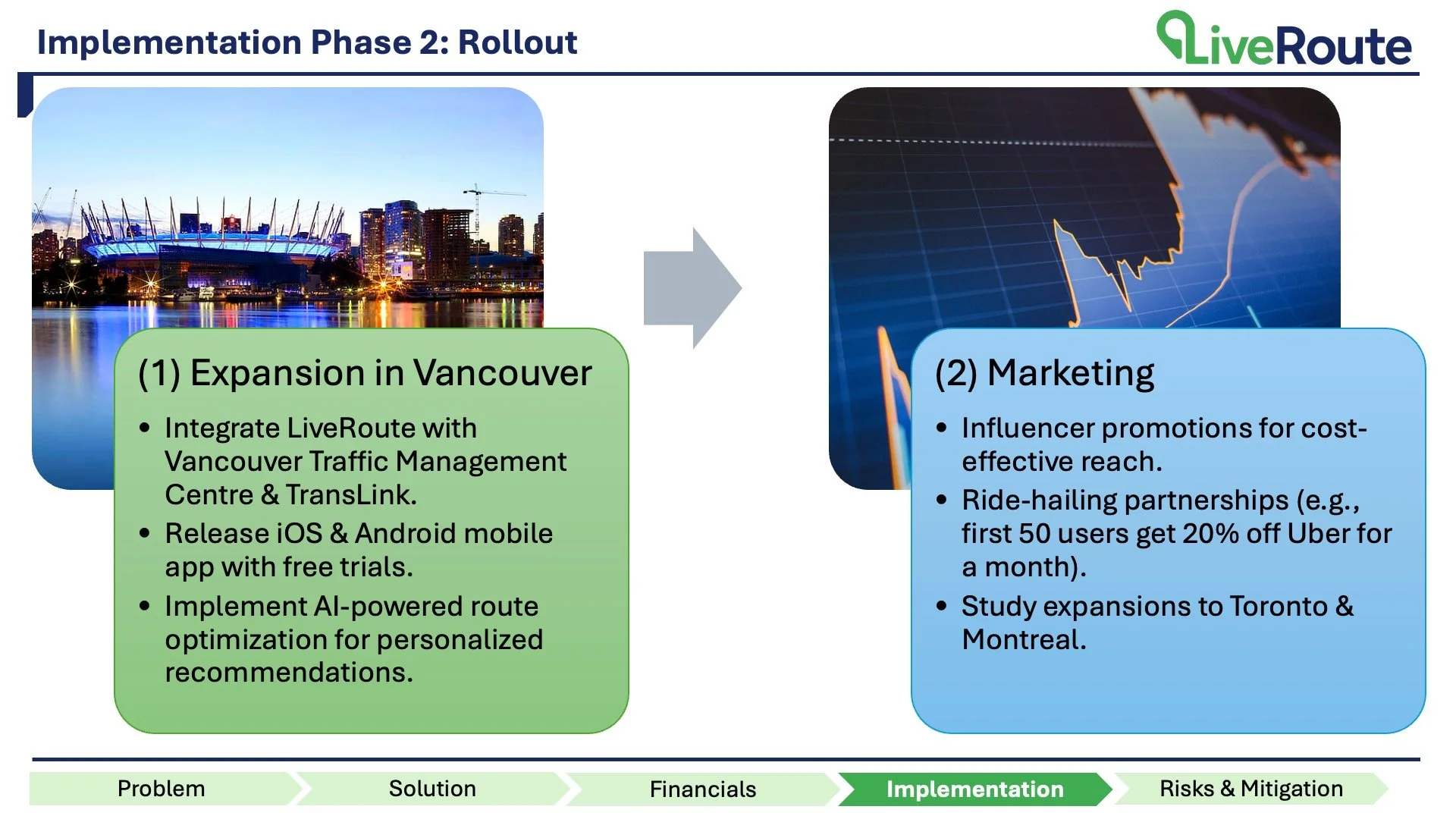
The LiveRoute concept was designed to be implemented through a phased rollout beginning with a pilot program in Vancouver. The initial pilot would focus on large public events where transportation demand surges create significant mobility challenges.
The platform would rely on partnerships with transportation authorities, event organizers, and mobility providers such as transit agencies, ride-hailing services, and shared mobility operators. Data collected from these partners would support predictive traffic modelling and real-time mobility monitoring.
Following the pilot phase, the platform could scale to support additional cities and events by expanding data integrations, refining predictive models, and strengthening partnerships with municipal transportation agencies.
Financial Feasibility
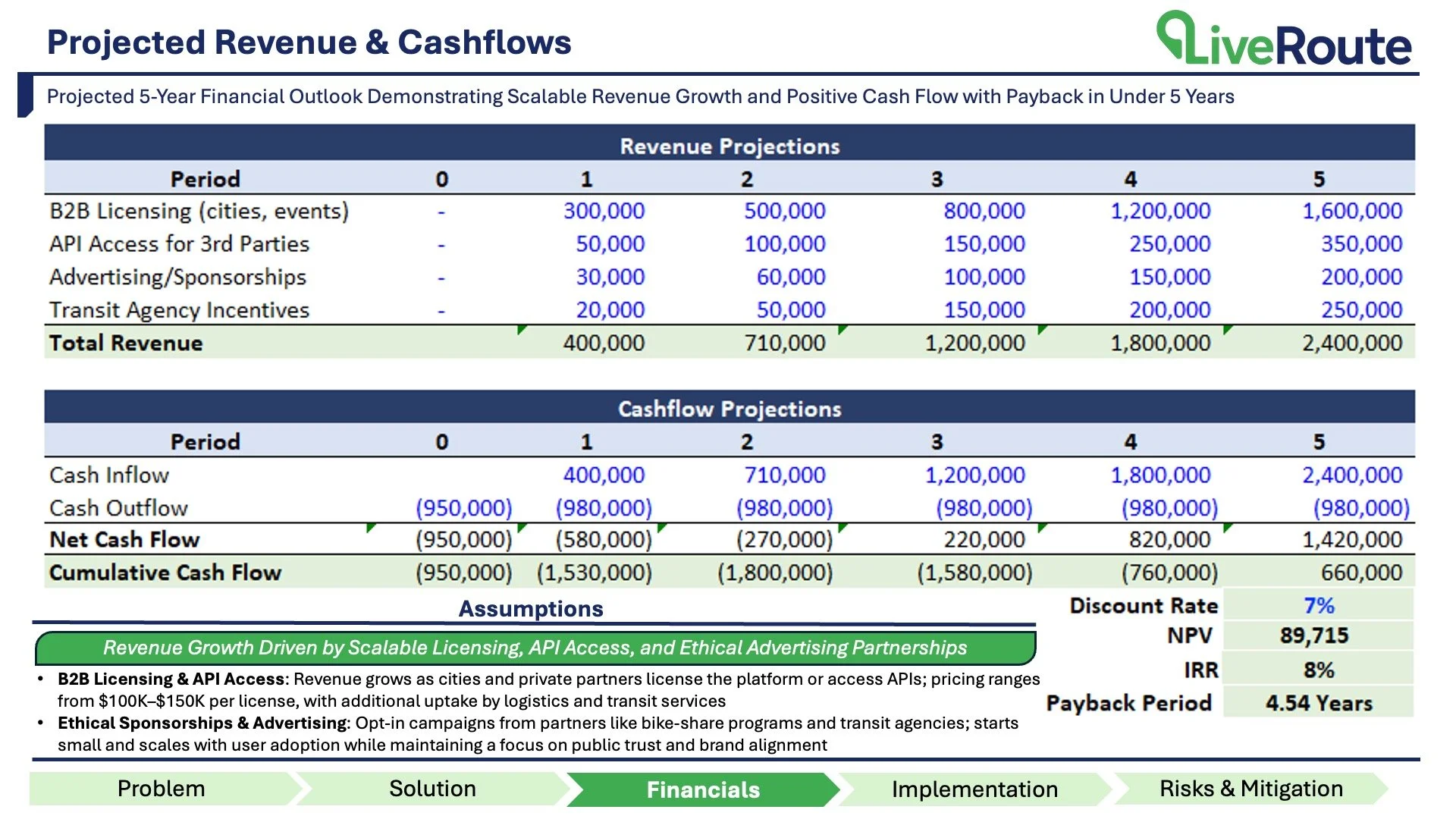
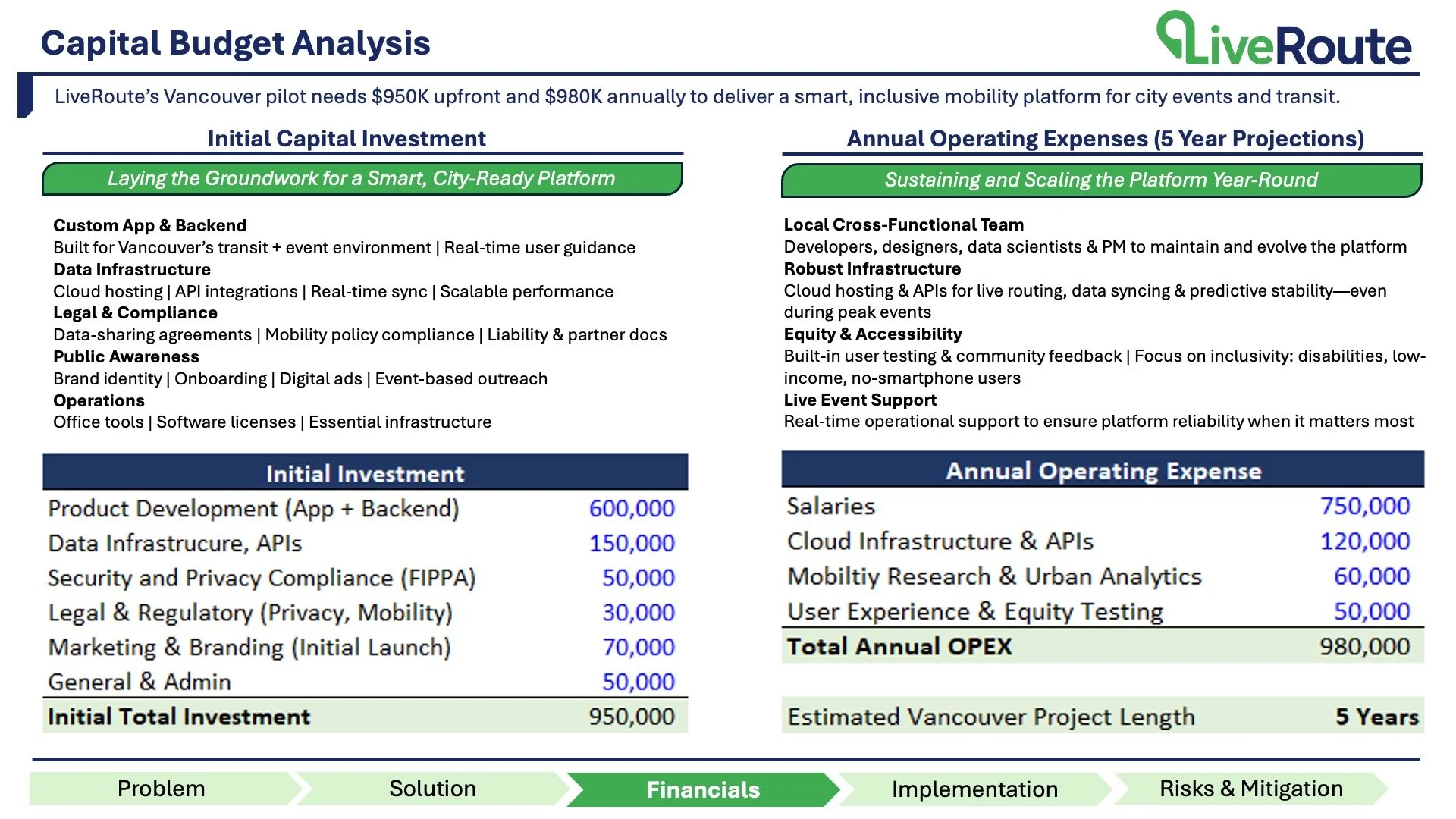
The proposal also considered the financial requirements of launching a pilot version of the platform. Initial investment would be required to develop the application, maintain data infrastructure, and support operational teams responsible for real-time monitoring during major events. Long-term sustainability could be supported through partnerships with municipalities, licensing agreements with mobility providers, and optional premium services within the user-facing application.
Risks & Considerations
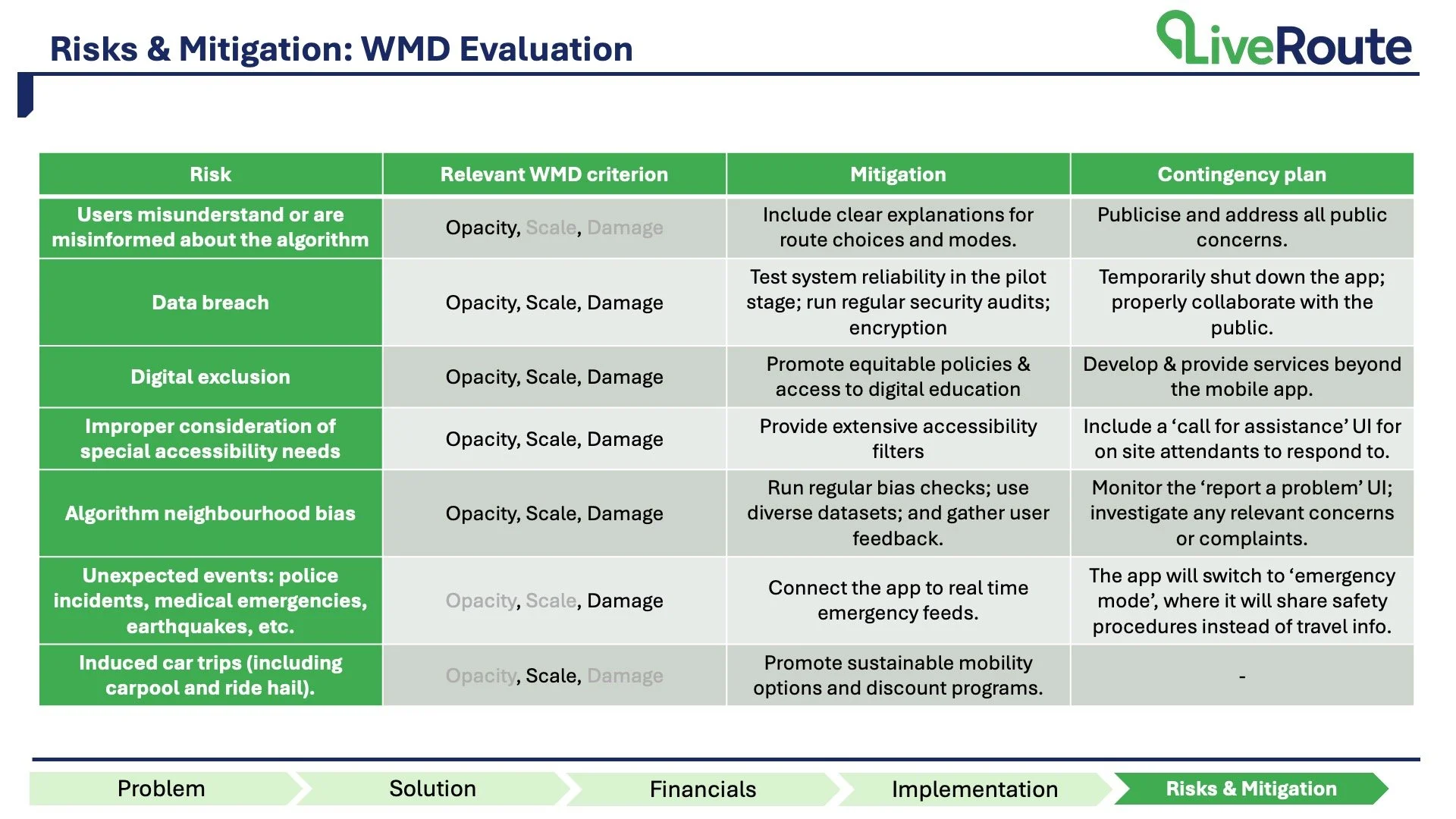
Implementing a smart mobility platform requires addressing several technical and policy challenges. Key considerations include data privacy and security when integrating transportation and user-generated data, equitable access for individuals without smartphones or digital connectivity, and coordination among multiple transportation providers.
The project also explored governance considerations such as data-sharing agreements, regulatory compliance, and the need for transparent algorithms when providing routing recommendations. Addressing these issues is essential to ensure that smart-city technologies remain inclusive, accountable, and publicly trusted.
My Contribution
Conducted research on mobility challenges associated with large-scale public events and analyzed existing approaches to event traffic management
Contributed to the conceptual design of the LiveRoute platform, including system architecture and user-facing features
Helped develop the proposal for integrating historical mobility data, real-time transportation information, and predictive modelling to anticipate traffic flows
Participated in developing the project pitch and presentation materials communicating the platform’s functionality and implementation strategy, and presented the proposal to instructors and peers
Contributed to the discussion of policy, governance, and operational considerations for implementing a smart mobility platform in Vancouver